5 Essential Elements of a Strong Brand Identity System
| Asto Brand Studio Team
In a market full of options, having a good product or service isn’t enough on its own. People are hit with endless marketing messages every day, so standing out takes more than just offering something decent. That’s where brand identity comes in.
A strong brand identity helps people recognize you, trust you, and understand what your business is all about. It keeps your look, message, and overall feel consistent so your audience remembers you for the right reasons.
Whether you’re building a brand from scratch or improving an existing one, getting this foundation right makes a big difference in long-term growth and success.
What Is a Brand Identity System?
A brand identity system is a collection of visual, verbal, and strategic elements that work together to create a consistent and recognizable brand experience. It goes beyond a logo and encompasses everything from color palettes and typography to messaging and brand personality.
When these elements are aligned, businesses can create stronger emotional connections with their audience and improve brand recall.
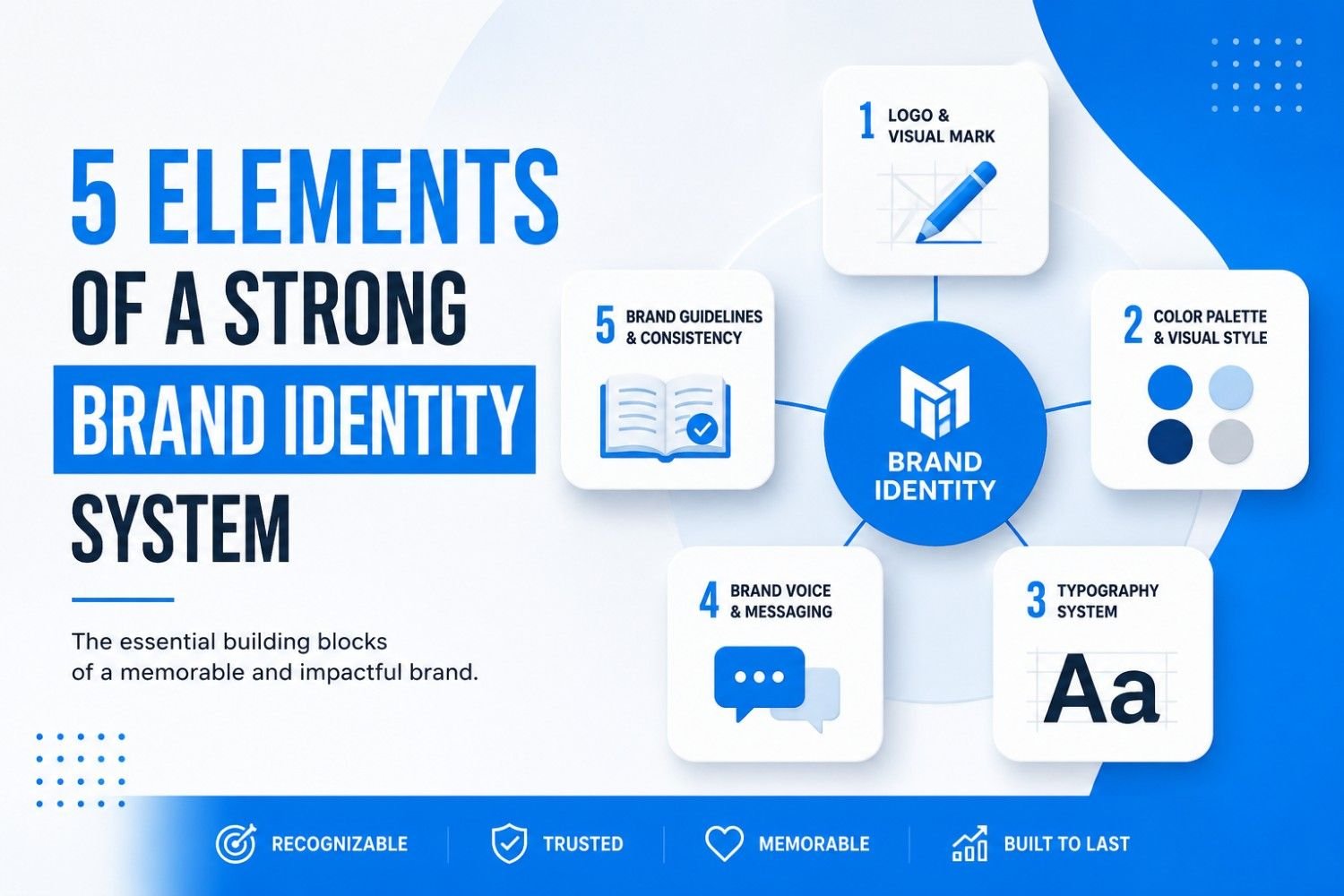
Let’s explore the five essential elements that form the foundation of a successful brand identity system.
1. Logo and Visual Mark
Your logo is often the first interaction people have with your brand. It serves as a visual representation of your business and acts as the cornerstone of your brand identity.
However, a strong logo does more than simply look attractive. It should:
- Be memorable and recognizable
- Reflect your brand values
- Remain effective across different sizes and platforms
- Stand the test of time
- Differentiate your business from competitors
The most successful logos are simple, versatile, and strategically designed to support the overall brand message.
Why It Matters
A professionally designed logo helps establish credibility and creates a strong first impression, making it easier for customers to recognize and remember your business.
2. Color Palette and Visual Style
Color plays a significant role in how consumers perceive brands. Research consistently shows that color can influence emotions, purchasing decisions, and brand recognition.
A strong brand identity system includes a carefully selected color palette that reflects the brand’s personality and positioning.
For example:
- Blue often represents trust and reliability.
- Green is associated with growth and sustainability.
- Red conveys energy and excitement.
- Black communicates sophistication and luxury.
Beyond colors, visual style includes:
- Photography direction
- Graphic elements
- Illustrations
- Iconography
- Design patterns
Why It Matters
Consistent visual elements create familiarity and improve brand recognition across websites, social media, packaging, advertising, and other marketing channels.
3. Typography System
Typography is one of the most overlooked components of brand identity, yet it significantly impacts how a brand feels and communicates.
A typography system defines the fonts and text hierarchy used throughout all brand materials.
An effective typography system should include:
- Primary brand font
- Secondary supporting font
- Heading styles
- Body text styles
- Digital and print usage guidelines
Different typefaces communicate different emotions. For example, modern sans-serif fonts often feel clean and innovative, while serif fonts can convey tradition and authority.
Why It Matters
Consistent typography strengthens brand recognition and creates a professional, cohesive experience across all customer touchpoints.
4. Brand Voice and Messaging
Visual identity attracts attention, but messaging builds connection.
Your brand voice defines how your business communicates with its audience. It includes the tone, language, and personality used across all communications.
Questions to consider include:
- Is your brand professional or conversational?
- Authoritative or approachable?
- Bold or supportive?
- Innovative or traditional?
Brand messaging should also define:
- Mission statement
- Value proposition
- Brand story
- Core messaging pillars
- Taglines and slogans
Why It Matters
Consistent messaging helps customers understand who you are, what you stand for, and why they should choose your business over competitors.
5. Brand Guidelines and Consistency
Even the strongest visual identity can fail if it is applied inconsistently.
Brand guidelines serve as the rulebook for your brand identity system. They ensure every team member, designer, marketer, and partner represents the brand consistently.
Comprehensive brand guidelines typically include:
- Logo usage rules
- Color specifications
- Typography standards
- Photography guidelines
- Tone of voice instructions
- Social media branding rules
- Marketing collateral examples
Why It Matters
Consistency builds trust. When customers encounter a consistent brand experience across every interaction, they are more likely to remember, trust, and engage with the brand.
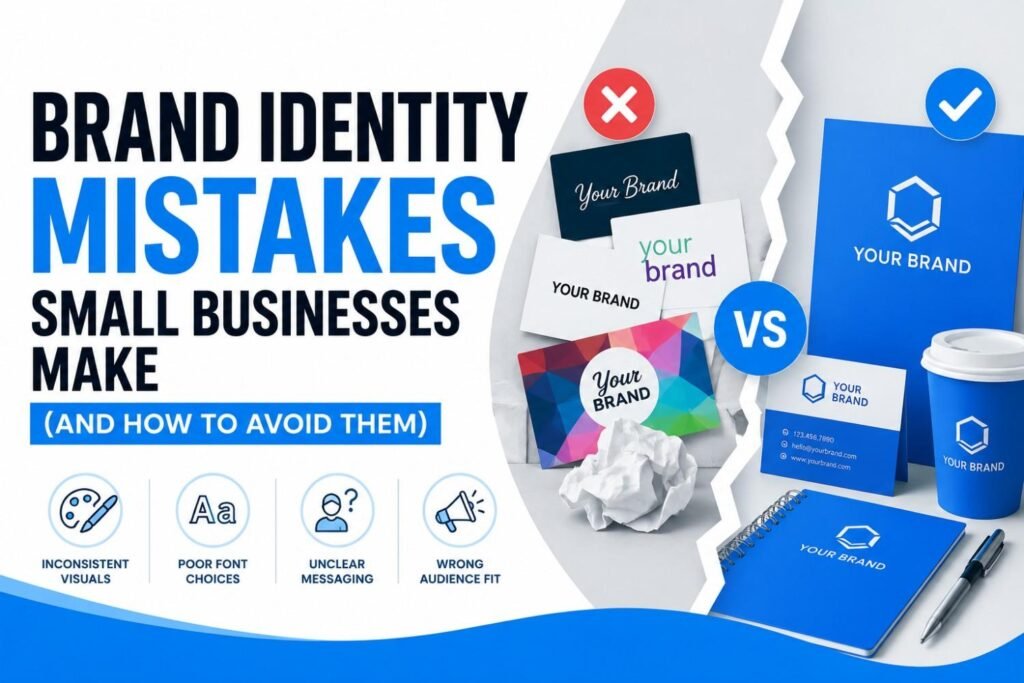
Common Brand Identity Mistakes to Avoid
Many businesses struggle with branding because they focus solely on visual design while ignoring strategy and consistency.
Common mistakes include:
- Constantly changing logos and visual styles
- Using inconsistent colors and fonts
- Lacking a defined brand voice
- Copying competitors instead of creating differentiation
- Operating without brand guidelines
- Treating branding as a one-time project
A successful brand identity system requires ongoing management and refinement as the business grows.
Benefits of a Strong Brand Identity System
Investing in a cohesive brand identity delivers measurable business benefits, including:
- Increased brand recognition
- Greater customer trust and loyalty
- Higher perceived value
- Improved marketing effectiveness
- Better customer engagement
- Stronger competitive positioning
- More consistent customer experiences
Businesses with strong branding often find it easier to attract customers, command premium pricing, and build long-term relationships.
Final Thoughts
A strong brand identity system is much more than a logo or a set of colors. It is a strategic framework that shapes how customers perceive your business and interact with your brand.
The strongest brands are not necessarily the loudest. They are the most consistent. Every visual element, message, and customer interaction should reinforce the same identity, creating a brand experience that customers can trust and remember.

Asto Brand Studio Team
Asto Brand Studio is a creative agency specializing in branding, web design, and digital experiences. We help businesses build strong, strategic identities that stand out, connect with the right audience, and drive meaningful growth.
Asto Brand Studio Team
Asto Brand Studio is a creative agency specializing in branding, web design, and digital experiences. We help businesses build strong, strategic identities that stand out, connect with the right audience, and drive meaningful growth.